EKSPANSI PERKEBUNAN DAN PERTUMBUHAN PENDUDUK DI SUMATRA TIMUR, 1863-1942
DOI:
https://doi.org/10.33652/handep.v6i2.350Keywords:
colonialism, capitalism, plantation, population, and laborAbstract
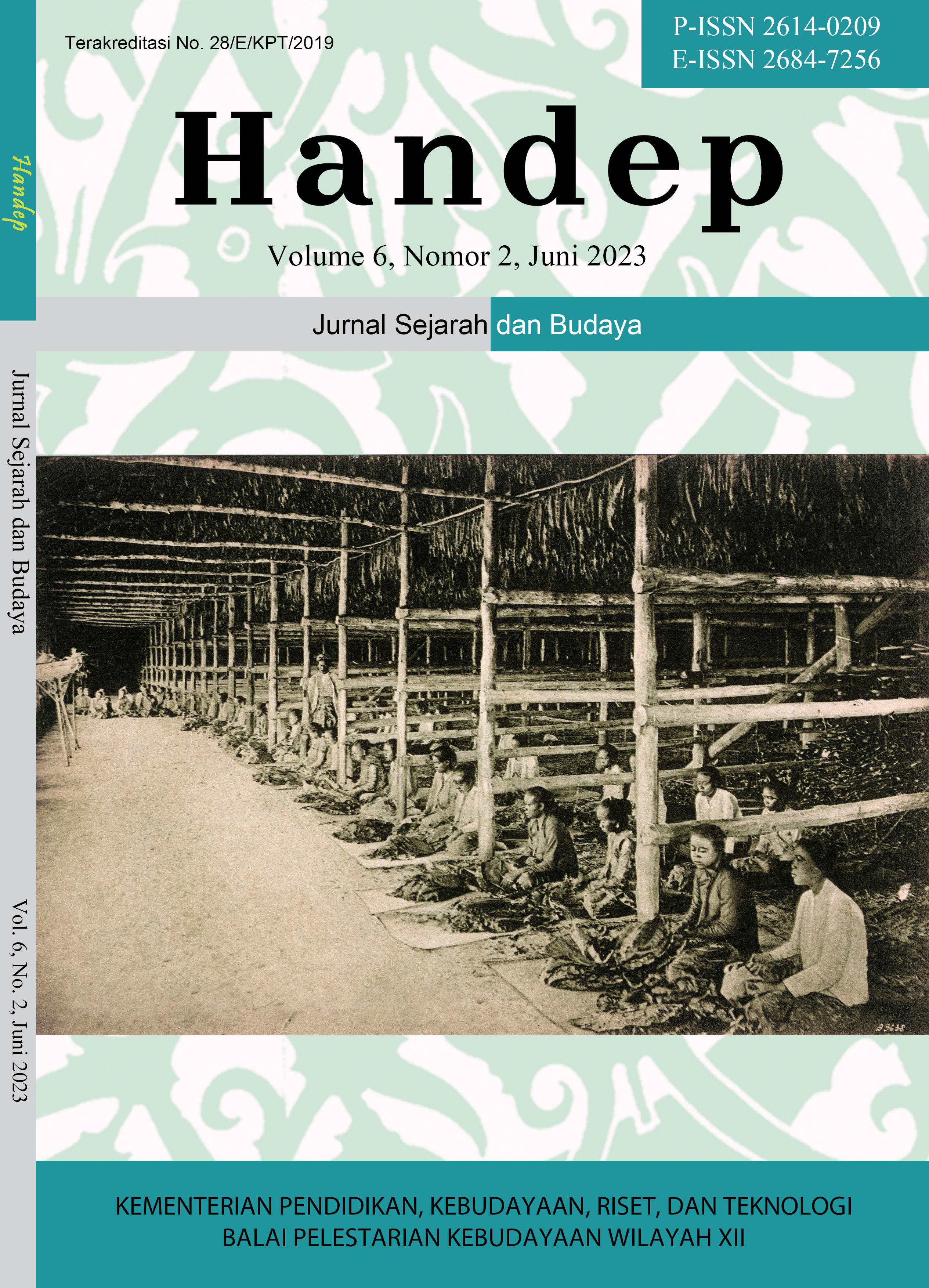
This paper aims to examine the population growth issue in East Sumatra during the colonial period, which is closely related to the interests of the plantation industry. The limited historiography of East Sumatra underlies this paper because it interprets population growth as a matter of capitalist plantation production relations. East Sumatra has experienced significant population growth since plantation companies initiated and encouraged migration to meet the need for cheap labor for accumulation. Applying historical methods and a political economy approach, this paper emphasizes that population growth directly implies capitalist plantation production relations. An important conclusion from this study is that changes in the population structure in East Sumatra during the colonial period were closely related to the interests of labor issues of the plantation industry. The forced labor regime under the poenale sanction scheme prompted Chinese labour migration. Furthermore, the poenale sanctie eradication has shifted the labor regime to the free worker promoting the colonization program of Javanese coolies. This shift eventually greatly influenced the structure and composition of the East Sumatra population. It is important to note that this study includes the migration outside the interests of the plantation industry, which was carried out independently by residents in the vicinity who were interested in East Sumatra’s economic growth.References
Anderson, John. 1826. Mission to the East Coast of Sumatra. Blackwood: London.
Anonim. 1904. “Een ander over Deli.” Indische Mercuur, November, 22.
Anonim. 1918. Mededeelingen van het Bureau voor de Bestuurszaken der Buitenbezittingen Bewerkt door het Encyclopaedisch Bureau. Semarang-Surabaya-Den Haag: N.V. Boekhandel & Drukkerji.
Anonim a. 1929. “Strefte onder Contractsarbied.” Algemeene Handelsblad, April, 28
Anonim b. 1929. “Landbouw en Arbiedkolonisatie.” De Sumatra Post, Juni, 05.
Anonim. 1939. “Ootskust van Sumatra Instituut Vergadering te Amsterdam.” De Sumatra Post, Desember, 28.
Bernstein, Henry. 2020. Dinamika Kelas dalam Perubahan Agraria. Yogyakarta: Insist Press.
Breman, Jan. 1997. Menjinakkan Sang Kuli: Politik Kolonial, Tuan Kebun, Kuli di Sumatra Timur pada Awal Abad ke-20. Jakarta: PT. Pusataka Utama Grafiti.
Bool, H.J. 1903. De Chinese Immigratie naar Deli. s.l: s.n.
Broersma, R. 1919. Oostkust van Sumatra: De Ontluiking van Deli. Batavia: Javasche Boekhandel & Drukkerij.
_____. 1922. De Ontwikkeling van het Gewest, Deventer: De UItgave van Dixon. Batavia: Javasche Boekhandel & Drukkerij.
Colombijn, Freek 1997. “The Ecological Sustainability of Frontier Societies in Eastern Sumatra.” Hlm. 309-40, dalam Paper Landscape, Exploration in the Environmental History of Indonesia, disunting oleh Peter Boomgaard, Freek Colombijn, and David Henley. Leiden: KITLV Press.
Cremer, J.T. 1889. “Deli Schetsen: Geneeskundig Verpleging.” Eigen Haard (22):56-61.
Departement van Landbouw, Nejverheid en Handel. 1933. Volkstelling 1930.
Driel, B. M. van 1935. “De sterfte der Ondernemings Arbeiders in de Buitengewesten van Nederlandsch Indië in 1931 en 1932.” Geneeskundig Tijdschrift voor Nederlandsche-Indie 75(21):1795- 819.
Geertz, Clifford. 1976. Involusi Pertanian: Perubahan Ekologi di Indonesia. Jakarta: Bhratara.
Gramberg, J.S.G. 1881. “De Oostkust van Sumatra V”. Indische Gids 3(1): 356-71.
Halewijn, E. A. 1876. “Geographische en Ethnographische Gegevens Betreffende het Rijk van Deli (Oostkust van Sumatra).” Indische Land,- Taal,- en Volkenkunde 23: 147-58.
Ikhsan, Edy .2015. Konflik Tanah Ulayat dan Pluralisme Hukum: Hilangnya Ruang Hidup Orang Melayu Deli. Jakarta: Yayasan Pustaka Obor.
Junaidi. 2018. “Transformasi Modernitas di Kota Medan: Dari Kampung Medan Putri Hingga Gemeente Medan.” Jurnal Sejarah 1(2):65-83.
Langenberg, Michael van. 1982. “Class and Ethnic Conflict in Indonesian’s Decolonization Process: A Study of East Sumatra.” Indonesia 33 (33):1-30.
Netscher, Elisa. 1864. “Togtjes in het gebied van Riouw en onderhoorighede: Landschap op Deli.” Tijdschrift voor Indische Taal-, Land,-en Volkenkunde 19:340-51.
Nienhuys, Jacobous. 1903. “De Vesteging der Tabakscultuur op Deli.” Indische Mercuur, Januari, 6.
Pelly, Usman. 1984. Sejarah Sosial Daerah Sumatra Utara Kotamadya Medan. Jakarta: Depdikbud.
_____. 1994. Urbanisasi dan Adaptasi: Peranan Misi Budaya Minang kabau dan Mandailing. Jakarta: Pustaka LP3ES Indonesia.
Pelzer, Karl. 1985. Toean Keboen dan Petani: Politik Kolonial dan Perjuangan Agraria. Jakarta: Sinar Harapan.
Raet, J.A.M. van Cats Baron de. 1876. “Vergelijking van den vroegeren toestand van Deli, Serdang en Langkat met den tegenwoordigen.” Indische Land,- Taal,- en Volkenkunde (23):20-39
Reid, Anthony. 1997. “Inside Out: The Colonial Displacement of Sumatra Population.” Hlm.61-90, dalam Paper Landscape, Exploration in the Environmental History of Indonesia, disunting oleh Peter Boomgaard, Freek Colombijn, and David Hanley. Leiden: KITLV Press.
Said, Mohammad. 1990. Koeli Kontrak Tempo Doeloe: Dengan Derita dan Kemarahannya. Medan: Penerbit Waspada Medan.
Sinaga, Rosmaida, Lister Eva Simangunsong, dan Syarifah. 2020. Kolonialisme dan Multikulturalisme Masyarakat Kota Medan. Medan: Yayasan Kita Menulis.
Straub, Dr. M. 1926. Kindersterfte ter Oostkust van Sumatra. Amsterdam: Uitgave van het Instituut.
Stoler, Ann Laura. 1985. Capitalism and Confrontation in Sumatra’s Plantation Belt, 1870-1979. New Haven and London: Yale University Press.
Thee Kian Wie. 1977. Plantation Agriculture and Export Growth: An Economic History of East Sumatra, 1863-1942. Jakarta: National Institute of Economic and Social Research.
Turner, F.J. 1921. The Frontier in America History. New York: H. Holt & Co.
Volker, T. 1928. Van Oerbosch tot Cultuurgebied: een Schets van de Beteekenis van de Tabak, de Andere Cultures en de Industrie ter Oostkust van Sumatra. Medan: Deli Planters Vereeniging.
Waal, R. van de. 1959. “Richtlijnen voor een Ontwikkelings-plan voor de Oostkust van Sumatra.” Disertasi, Wageningen Agricultural College.
Wertheim, Wim. F. 1933. “Conditions on Sugar Estates in Colonial Java: Comparisons with Deli.” Journal of Southeast Asian Studies, 24(2):268-84Westerman, Willem. 1901. De Tabakscultuur op Sumatra’s Oostkust. Amsterdam: J.H. De Bussy.
Downloads
Published
Issue
Section
License
By submitting the manuscript of papers/articles to Handep: Jurnal Sejarah dan Budaya, the authors are agreed to the following terms stated in copyright and license. Please also read our Publication Ethics dan Screening for Plagiarism.
Copyright
Authors who wish to publish and disseminate their papers with Handep: Jurnal Sejarah dan Budaya, shall agree to the publishing rights set by Handep: Jurnal Sejarah dan Budaya. Authors understand that they shall assign publication right to Handep: Jurnal Sejarah dan Budaya as part of the process upon acceptance for publication. The authors agreed that they will transfer certain copyrights to Handep: Jurnal Sejarah dan Budaya (authors must transfer the copyright by using the downloaded form HERE). Consecutively, authors still retain the right to use and share their own published articles without written permission from Handep: Jurnal Sejarah dan Budaya, as long as attributed properly, that the articles are initially published at Handep: Jurnal Sejarah dan Budaya.
Authors granted Handep: Jurnal Sejarah dan Budaya these following rights; (1) the right to publish and provide the manuscripts in all forms and media for publication and dissemination, (2) the authority to enforce the rights in the manuscript, for example in the case of plagiarism or copyright infringement.
License
Works in Handep: Jurnal Sejarah dan Budaya licensed under Creative Commons Attribution license. Users are free to copy and redistribute the material in any medium or format, remix, transform, and build upon the material under these terms; users must give appropriate credit, provide a link to the license, and indicate if changes were made. Users may do so in any reasonable manner, but not in any way that suggests the licensor endorses users or their usage.